HealthTrust Europe welcomes Jo Gibbs as Vice President of Sales & Marketing

HealthTrust Europe, a trusted procurement and supply chain partner for the public and private sectors, is delighted to announce that Jo Gibbs has officially joined the organisation as Vice President of Sales & Marketing.

Jo will lead our Sales and Marketing function, driving strategy to strengthen customer relationships and deliver innovative solutions that support operational efficiencies and cost savings across the healthcare and non-healthcare sectors.

Jo brings a wealth of experience from the med-tech industry, having spent 15 years at Johnson & Johnson where she progressed through senior roles including Business Unit Director and Strategy & Market Development Director.

Her background includes launching and scaling business units, driving innovation and growth across markets, forging and managing strategic partnerships, and working at the intersection of regulatory, commercial and operational excellence.

Commenting on joining HealthTrust Europe, Jo said:

I’m delighted to be part of HealthTrust Europe’s journey, and to lead the sales and marketing function at such and exciting time for the organisation. My experience in MedTech has taught me the importance of aligning purpose with performance and building trusted relationships to deliver solutions that make a difference. I am passionate about leading with integrity, fostering innovation and creating strategies that deliver real value for our customers and partners. I am especially looking forward to working with a talented team to strengthen relationships, drive commercial growth and continue delivering exceptional service across the sectors we serve.

Gary Welch, Chief Executive Officer at HealthTrust Europe, added:

Jo brings a wealth of experience and a proven track record in sales and marketing leadership. Her expertise will be instrumental in helping us deliver innovative solutions and value to our customers. We are excited to welcome Jo to the team and look forward to the positive impact she will make across the organisation.

Located in Birmingham, HealthTrust Europe has an enviable track record of delivering leading procurement solutions for the public sector and is a Trusted Procurement Partner to over 1,000 organisations. Working with over 2,500 suppliers, the company empowers public sector organisations to achieve operational efficiencies and cost savings, access innovative technologies, and strengthen the performance of their services.

For further information contact Marketing@htepg.com or call 0845 887 5000.

Partnering for 2026-29: What the NHS Medium-Term Plan Means for Suppliers

Discover what the NHS Medium-Term Planning Framework (2026-29) means for suppliers, longer contracts, digital-first delivery and true partnership models that reward agility and impact.

The NHS is changing how it buys, builds and partners. Suppliers who align early bringing flexibility, data capability and a long-term mindset, will lead the next wave of transformation.

The NHS’s Medium-Term Planning Framework (2026-29) marks a turning point for the supplier community.

For years, most relationships were transactional with short-term contracts, reactive renewals and price driven decisions. That era is ending.

Over the next three years, the NHS wants transformation partners. Suppliers who can evolve with it, share accountability and help shape delivery across systems and regions.

Here’s What That Means in Real Terms:

  1. Multi-year contracts are the new normal.

Frameworks are stretching three to five years. The NHS is looking for suppliers who can stay the course, not just deliver and disappear.

  1. Digital is the baseline, not the bonus.

Every service must have a digital or data edge. Interoperability, analytics or automation that supports smarter decision making.

  1. Value means productivity + outcomes.

It’s not about being cheapest. It’s about helping the NHS do more with less and improving patient outcomes.

  1. Community health is where growth happens.

The shift to neighbourhood and preventative care opens new opportunities remote in monitoring, telehealth and diagnostics closer to home.

  1. Contracts will flex.

Expect variable payments tied to performance and shared risk/reward. Suppliers will need to prove outcomes, not just outputs.

  1. Scale and adaptability win.

Whether you’re a national player or niche specialist, the ability to integrate quickly and scale regionally will be key.

  1. Engage early.

Don’t wait for the tender notice. Systems are already shaping plans for 2026-29. Be part of the conversation before procurement formally begins.

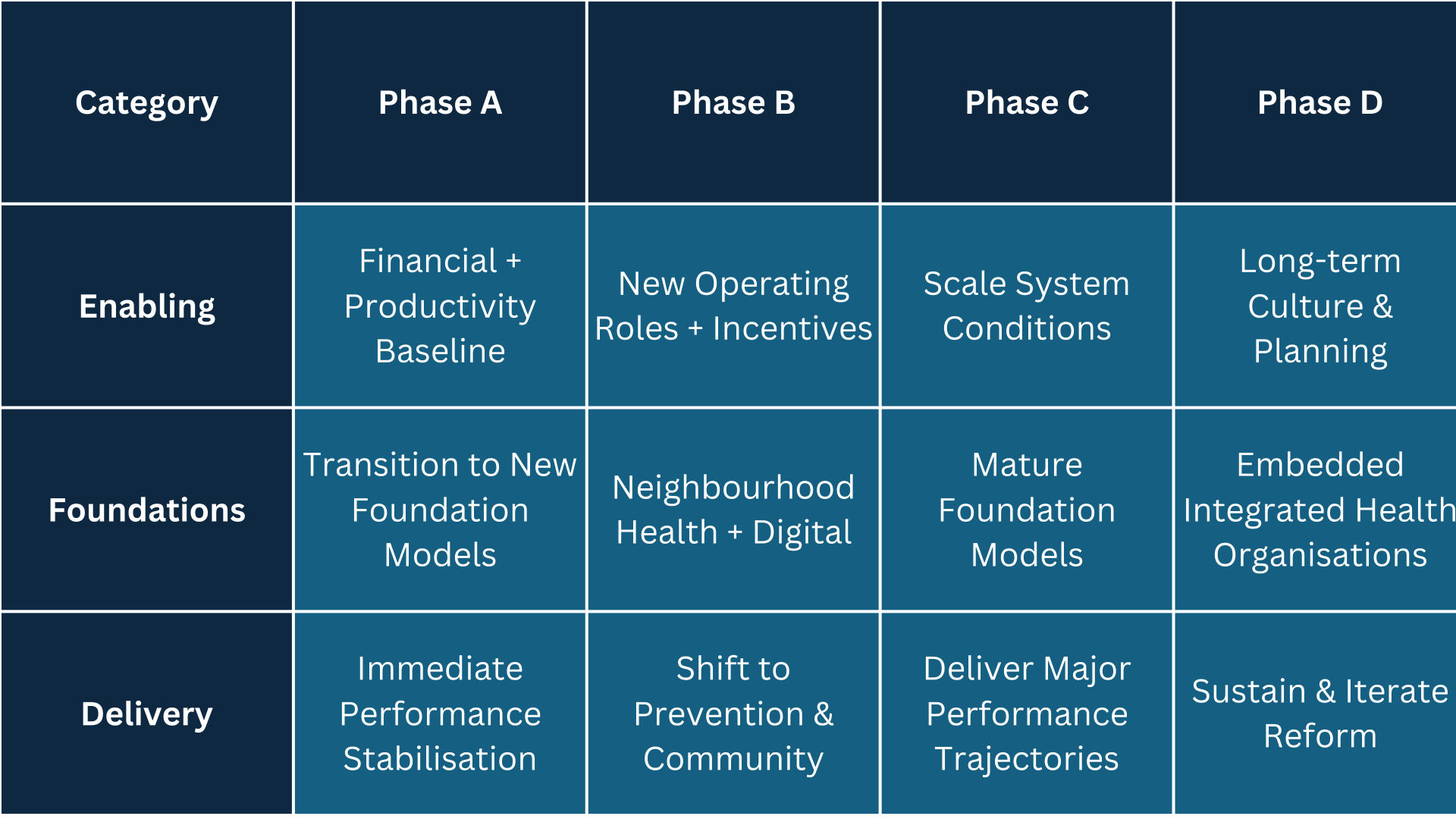
How the Best Practice Summary Model Looks:

What HealthTrust Europe Looks For:

  • A clear multi-year delivery roadmap
  • Proven digital and data credentials
  • A collaborative approach to solution design
  • Built-in flexibility and transparent value models
  • Strong governance on data, sustainability and outcomes

In a Nutshell:

The NHS wants long term transformation partners, not one-year vendors. The next three years will reward readiness, agility and real partnership. If you can show up early, adapt fast and deliver measurable change, you’ll stand out.

At HealthTrust Europe, we’re evolving our frameworks to make that possible. Connecting suppliers & systems who are ready to build the future, together.

Planning for 2026-29: A Procurement Director’s Roadmap

Explore how NHS procurement leaders can adapt to the new Medium-Term Planning Framework (2026-29). From annual contracts to long-term partnerships that deliver transformation & performance.

The NHS Medium-Term Planning Framework is reshaping how the system plans, spends and delivers. For procurement leaders, it’s an opportunity to think bigger and to move from transaction to transformation.

If you work in NHS procurement, the new Medium-Term Planning Framework (2026–29) isn’t just another policy document, it’s your roadmap for the next three years.

For too long, we’ve been caught in annual contracting cycles. Reacting to budgets, responding to pressures and renewing what already exists. This framework finally gives the NHS space to breathe and to plan ahead, align strategy with spend and build partnerships that last.

It’s more than operational reform, it’s a shift in mindset.

Multi-year planning means procurement can drive system outcomes, not just savings. Here’s what that looks like in practice:

Key Shifts to Watch:

  1. Think long-term, not one-year.

Multi-year funding allows procurement to align contracts with transformation goals. Move from ‘what can we afford this year?’ to ‘what delivers real impact over three?’.

  1. Buy for prevention and digital-first delivery.

Growth is happening in community care, prevention & digital services. Build those into your category plans early.

  1. Balance recovery & reform.

Procurement has to deliver short-term performance improvements and enable long-term change. Contracts should reward both efficiency and innovation.

  1. Map the new decision makers.

Influence is shifting toward ICB’s, regions, and neighbourhood teams. Build relationships where future decisions will actually be made.

  1. Look for supplier partnerships, not transactions.

Frameworks are evolving into long-term collaborations. Value flexibility, innovation and shared outcomes, not just lowest price.

  1. Build in governance and resilience.

As autonomy grows, so does risk. Procurement must champion data security, interoperability & financial discipline at every stage.

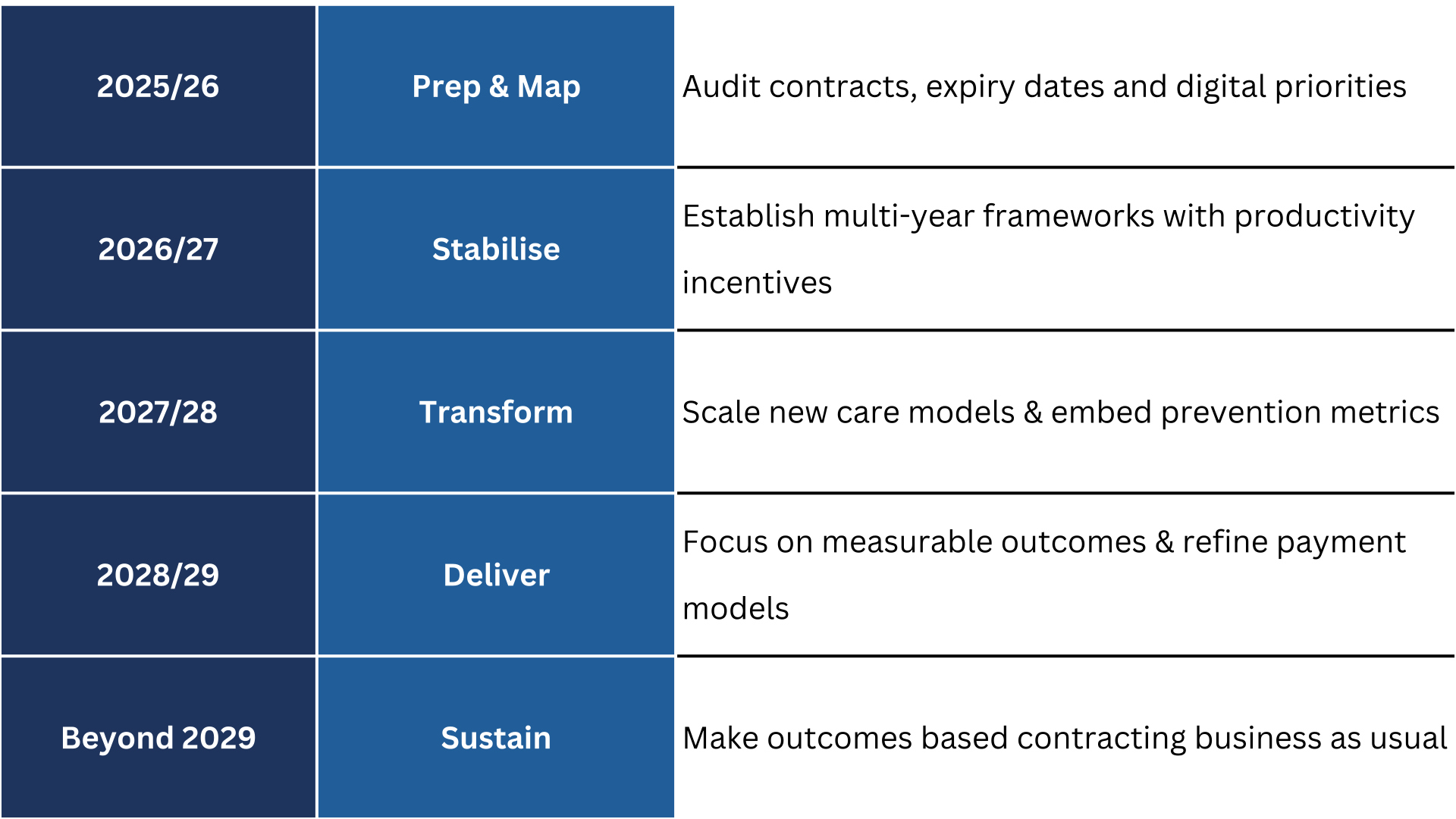
Your Clear Roadmap:

Five Questions to Ask Your Suppliers Now:

  1. Can you commit to a 3-5 year roadmap, not just a 12-month plan?
  2. How do you help us digitise, analyse and adapt faster?
  3. What measurable productivity gains can you prove?
  4. Can your contract flex as the system evolves?
  5. How do you enable prevention, not just service delivery?

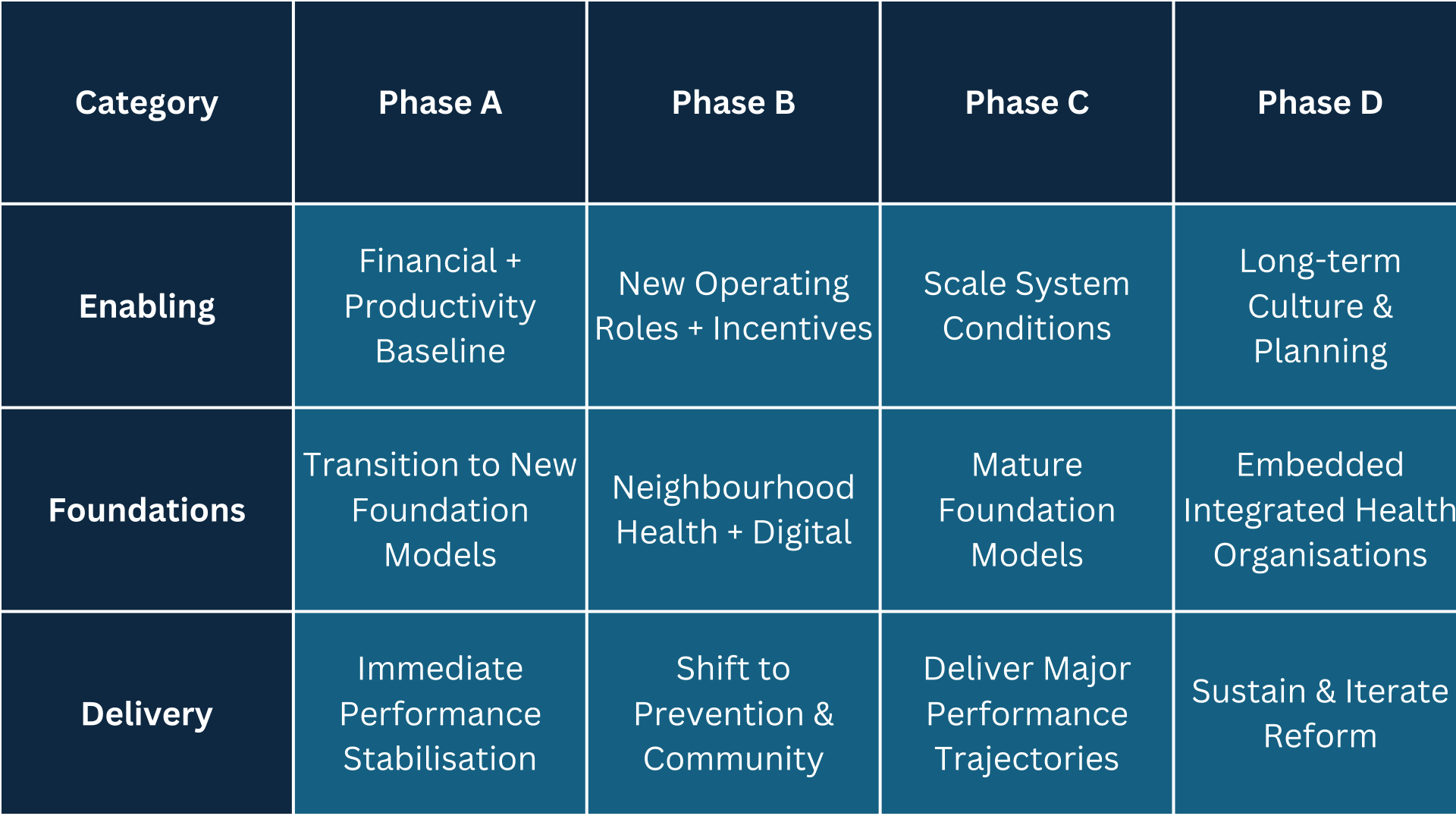
How the Best Practice Model Looks:

In short, the MTPF gives us breathing space but also raises the bar. Procurement needs to be bolder, earlier and more strategic. The future isn’t about running tenders faster, it’s about shaping how the NHS collaborates with its partners for the long term.

Navigating the Immigration Rule Changes: What Healthcare Providers Need to Know and How to Prepare

The UK government’s recently announced immigration changes, set to take effect from 22 July 2025, represent one of the most significant shifts in skilled worker policy in recent memory. With sweeping alterations to skills thresholds, salary levels, and eligibility criteria, health and care organisations face new operational pressures, particularly those reliant on international recruitment.

At HealthTrust Europe (HTE), we recognise the profound impact these changes will have on the NHS, social care providers, and wider health sector partners. As a leading procurement and workforce solutions partner to the UK public sector, we are committed to equipping our partners with the clarity, tools, and strategies needed to adapt.

A Shift Toward Higher Skilled, Domestic Recruitment

The new rules raise the Skilled Worker Visa threshold from RQF level 3 (A-level equivalent) to RQF level 6 (graduate level), effectively removing 112 previously eligible occupations. This change, combined with the closure of the Social Care Worker Visa route for new applicants, will significantly narrow the scope for overseas recruitment in key frontline roles.

From July, only time-limited recruitment into below degree roles (RQF 3–5) will be allowed via the Immigration Salary List (ISL) or Temporary Shortage List (TSL), and even then, with restrictions such as no dependants. For employers, this means a substantial acceleration in building sustainable, domestic workforce pipelines.


Facing the Workforce Challenge Head-On

While most Health and Care Visa holders paid according to national pay scales remain unaffected (salary thresholds still at £25,000), the broader context is clear: immigration is tightening. Roles such as care workers and senior care workers, once a lifeline for care providers facing critical shortages, will no longer be open to new overseas applicants.

With a transition period until 2028, employers must now prepare not only for immediate operational continuity but for a long-term workforce model that is less reliant on international recruitment for entry-level roles.


What Should Providers Be Doing Now?

HTE’s Total HR Solutions team is actively supporting organisations in navigating these upcoming immigration reforms. To ensure readiness and resilience, we recommend the following strategic actions:

  1. Conducting Workforce Impact Assessments
    Identify which current employees may be impacted by changes to visa eligibility or salary thresholds. Employers should communicate early and clearly to support staff and manage retention risks.
  2. Accelerating Certificate of Sponsorship (CoS) Applications
    If your organisation is planning to hire or renew skilled worker visas, submit CoS before 22 July so candidates can be assessed under current rules. CoS are valid for three months, offering a crucial window.
  3. Reassessing Recruitment and Retention Strategies
    With many RQF 3 to 5 roles being phased out of sponsorship, employers must strengthen their domestic pipelines. This includes expanding outreach, investing in training, and leveraging local partnerships.
  4. Reviewing Occupation Codes and Compliance
    Understand which roles remain eligible via the ISL or TSL and the restrictions that apply. Some roles (e.g., nursing auxiliaries) are now further defined to prevent misuse, requiring close attention to job descriptions and duties.


Building Workforce Resilience Through Strategic Partnerships

These immigration reforms mark a strategic pivot by government, one that prioritises high-skilled migration and places the onus on UK-based talent development. While challenging, this change also presents a vital opportunity for transformation.

At HTE, we believe that strategic workforce planning, supported by data, technology, and trusted partnerships, is the key to resilience. Our Total HR Solutions are designed to help public sector organisations navigate regulatory complexity, source talent ethically and efficiently, and build long-term capacity.

As the Migration Advisory Committee (MAC) continues to review eligible roles, we will keep you updated.

For more information on how HTE can help your organisation navigate these changes, contact THRS@htepg.com.

NHS 10-Year Health Plan: What Procurement Professionals Need to Know

The UK Government’s newly launched NHS 10-Year Health Plan sets out a bold and comprehensive roadmap for transforming health and care services across England. With sweeping reforms across finance, performance, technology, workforce, innovation, and care quality, the plan has significant implications for NHS procurement professionals.

Here are the key elements and what they could mean for NHS procurement teams:

1.Financial Reform and Budget Discipline

Deficit support funding will be removed from 2026, requiring all NHS bodies to meet operational planning targets without exception.

Budgets may be legally capped, similar to local councils, if financial discipline is not restored.

Mandatory 3% annual budget carve-out for service transformation will become standard.

Tariff pricing will shift from average cost models to best clinical practice benchmarks.

Implications for Procurement:

  • Procurement teams will need to support more strategic, value-based purchasing decisions.
  • There will be increased scrutiny on cost-effectiveness and alignment with transformation goals.
  • Contracting will need to reflect new tariff structures and prioritise outcomes over inputs.

2.Shift to Community and Neighbourhood Care

A “decisive shift” in investment from hospitals to community care is planned over the next decade.

Neighbourhood health centres will be rolled out nationally, starting with public sector capital and potentially expanding via public-private partnerships.

Outpatient care will be restructured, with most services delivered outside hospitals by 2035.

Implications for Procurement:

  • Procurement professionals will need to support the commissioning of services and infrastructure for neighbourhood health centres.
  • This includes sourcing community-based providers, digital platforms, and integrated care solutions.

3.Organisational and Structural Changes

All NHS providers are expected to become Foundation Trusts (FTs) by 2035.

High-performing FTs may evolve into Integrated Health Organisations (IHOs), managing entire health budgets for defined populations.

Capital approval processes will be streamlined, with greater flexibility in multi-year planning.

Implications for Procurement:

  • Procurement teams will need to adapt to new governance models and support IHOs with integrated procurement strategies.
  • There will be opportunities to consolidate contracts and align procurement with population health outcomes.

4.Workforce and Quality Standards

A new 10-Year Workforce Plan will be published later this year.

Minimum employment standards will be introduced in April 2026.

The National Quality Board will be reformed, and new service frameworks will be developed for priority areas such as cardiovascular disease and dementia.

Implications for Procurement:

  • Procurement will play a role in sourcing workforce-related services, training platforms, and quality improvement tools.
  • Contracts will need to reflect new employment standards and support continuous quality monitoring.

5.Technology and Data Integration

The NHS App will become the “full front door” to the NHS by 2028.

A single patient record (SPR) will be legislated, with data contributions from validated wearables.

Ambient voice technology will be introduced in hospitals and GP practices.

Implications for Procurement:

  • Procurement professionals will need to engage with digital health suppliers, manage interoperability requirements, and ensure compliance with data governance standards.
  • Value-based procurement for digital tools will become a priority.

6.Innovation and Industry Partnerships

Regional Health Innovation Zones will be established to foster radical innovation.

A new innovation passport and value-based procurement guidance for devices and digital products will be introduced.

The NHS will seek genuine partnerships with industry, moving beyond transactional relationships.

Implications for Procurement:

  • Procurement teams will need to support agile sourcing models, pilot new technologies, and collaborate closely with suppliers to co-develop solutions.
  • Frameworks must be flexible enough to accommodate rapid innovation cycles.

Conclusion

The NHS 10-Year Health Plan represents a fundamental shift in how health services are funded, delivered, and evaluated.

For NHS procurement professionals, it calls for a more strategic, integrated, and outcomes-focused approach.

Staying informed and agile will be key to navigating these changes and ensuring procurement continues to deliver value across the system.


ProTrust Global Launches with New Identity and Expanded Procurement Capabilities

Backed by HealthTrust Europe, ProTrust Global (PTG) unveils a rebrand and expanded category offering designed to help private-sector partners streamline procurement and reduce costs.

Right product, Right place, Right price, Right now.

ProTrust Global (PTG), a trusted procurement partner backed by HealthTrust Europe, today announced its official rebrand and the launch of a significantly expanded service offering. The transformation reflects PTG’s strategic growth and commitment to delivering smarter, more efficient procurement solutions to private-sector organisations.

The new brand identity, accompanied by a refreshed website, marks a pivotal step in PTG’s evolution. With a bold new look and enhanced digital presence, PTG is better positioned to support members with innovative tools and tailored services.

Key highlights of the launch include:

  • Expanded Procurement Categories – PTG now offers access to a broader range of procurement categories, including chemicals, technology, and packaging, enabling members to consolidate suppliers and drive greater value.
  • Custom Sourcing Services – Members can now benefit from bespoke sourcing solutions, including e-auctions, to secure the best value and streamline procurement processes.
  • Unified Hub Launch – PTG introduces a centralised digital platform for contract access and spend management, empowering members with real-time insights and control over their procurement activities.
  • Member Engagement Opportunities – PTG invites members to participate in online review meetings, offering immediate opportunities to explore new services and provide feedback. Book now!

“This rebrand is more than a new name and logo—it’s a reflection of our commitment to innovation, efficiency, and partnership,” said a PTG spokesperson. “We’re excited to offer our members even more value through expanded services and smarter procurement tools.”

For more information, visit www.protrustglobal.com or contact customercare@protrustglobal.com | 0845 887 4950 | Request Appointment

Health Trust Europe LLP Welcomes New VP of Strategic Sourcing

Birmingham, UK – 5th June 2025 – Health Trust Europe LLP is pleased to announce the appointment of Jonathan Edwards as Vice President of Strategic Sourcing, effective 16th June 2025.

Jonathan Edwards joins HealthTrust Europe from Northwest London Procurement Services, where he served as Healthcare Category Director. With a distinguished career spanning both the private and public sectors, Jonathan has led procurement and sourcing teams with a focus on innovation and efficiency.

Jonathan’s expertise in modernising procurement practices, leveraging cutting-edge technology, and developing high-performing teams will be instrumental in advancing HealthTrust Europe’s mission. His leadership will support the delivery of best-in-class frameworks and procurement services to the NHS and the wider public sector.

“We are thrilled to welcome Jonathan to our team,” said Gary Welch, Chief Executive Officer of HealthTrust Europe. “His unique approach and proven track record in procurement will be invaluable as we continue to enhance our services and support our Customers.”

Jonathan expressed his enthusiasm for the new role, stating, “I am excited to join HealthTrust Europe and contribute to its mission of delivering exceptional procurement services. I look forward to working with the team to drive innovation and excellence.”

For more information, please contact: HealthTrust Europe Marketing and Communications team, marketing@htepg.com 0845 887 5000.

HealthTrust Europe Celebrates Third Year as Corporate Partner of HCSA

HealthTrust Europe is delighted to announce the continuation of its corporate partnership with the Health Care Supply Association (HCSA) as they enter their third year of collaboration. This partnership underscores HealthTrust Europe’s commitment to supporting the healthcare supply chain community and fostering innovation and excellence in procurement practices.

Strengthening Healthcare Supply Chains

HealthTrust Europe has worked closely with HCSA to support its members in optimising processes and enhancing efficiency. This collaboration has been instrumental in driving significant advancements in procurement processes, ultimately benefiting healthcare providers and the patients they serve.

“We are thrilled to continue our partnership with HCSA,” said Gary Welch, Chief Executive Officer at HealthTrust Europe. “Our collaboration so far has supported healthcare providers in making significant advancements in healthcare, and we look forward to furthering our shared goals in the coming year.”

Our Solutions

Over the past two years, HealthTrust Europe has introduced several solutions aimed at improving supply chain efficiency and patient care outcomes which can benefit HCSA Members. These include:

  • Portfolio Performance Services: Launching comprehensive services to optimise portfolio performance and drive value for healthcare organisations.
  • Customer Sourcing and e-Auction: Introducing innovative customer sourcing solutions and Dynamic Pricing Events via eAuction to streamline procurement processes and reduce costs.
  • Frameworks to Support Healthcare Delivery: Implementing a number of frameworks designed to support efficient and effective healthcare delivery.

Looking Ahead 

As HealthTrust Europe embarks on its third year as an HCSA Corporate Partner, both organisations are excited about the opportunities ahead to drive positive change in the healthcare sector. HealthTrust Europe remains committed to its mission of improving healthcare in the communities it serves through strengthening provider performance and clinical excellence.

Gary Welch added: “HealthTrust Europe’s core mission is to improve healthcare in the communities we serve through strengthening provider performance and clinical excellence. We work as a Trusted Procurement Partner with healthcare associations and providers to build strong relationships founded on shared goals and mutual understanding. HCSA promotes the work of procurement and supply chain staff at all levels in healthcare, and as a Corporate Partner of HCSA, we look forward to continuing to work together and collaborating with HCSA Members to drive positive patient outcomes and further enhance the high quality of care delivered across the UK.”


Case Study: Enhancing Prosthetics, Orthotics and Specialised Seating Managed Services Contract Management

Background: 

The South West London Acute Provider Collaborative is a partnership between four acute NHS trusts in South West London: St George’s University Hospitals NHS Foundation Trust, Epsom and St Helier University Hospitals NHS Trust, Croydon Health Services NHS Trust, and Kingston Hospital NHS Foundation Trust. The collaborative aims to improve clinical outcomes, reduce health inequalities, and enhance the efficiency and sustainability of healthcare services.

Prior to performing the work presented in this case study, HealthTrust Europe worked with the South West London Acute Provider Collaborative on two engagements:

 1st Engagement: Epsom and St Helier University Hospitals:

  • Both facilities were interested in orthotics services.

2nd  Engagement: Onboarding Croydon University Hospital Contract:

  • Impressed by HealthTrust Europe’s performance, the Category Lead requested similar support for Croydon University Hospital, whereby HealthTrust Europe facilitated a call-off contract for orthotics services at Croydon University Hospital, aligning with the patient mobility framework.

Sourcing Activity Support and Results:

  • HealthTrust Europe’s comprehensive approach included engaging vendors, managing all aspects of contract negotiations, including back-and-forth communication, drafting, and finalising terms.
  • HealthTrust Europe facilitated final agreement and obtained contract signatures from all stakeholders.
  • HealthTrust Europe ensured contract compliance and efficient contract management.
  • This streamlined process eased the contact person’s burden, allowing them to focus on strategic priorities.

Situation: 

HealthTrust Europe’s successful management of the initial contracts built a strong foundation of trust and strategic relations with the South West London Acute Provider Collaborative. In early 2023, HealthTrust Europe began collaborating with St George’s University Hospital NHS Trust, a large healthcare facility with an extensive Prosthetics and Orthotics service. The Trust specialises in complex rehabilitation problems for patients with musculoskeletal, degenerative, and/or neuromuscular issues. The Trust has been named a Veteran Aware Trust, demonstrating their commitment to improving NHS care for veterans, reservists, members of the armed forces, and their families. The Trust’s Prosthetic profile includes around 4,000 people, 12 of whom are veterans, and their Orthotic profile includes around 22,000 people.

Task: 

The Category Lead for Diagnostics, Women’s, Children’s, and Therapies approached HealthTrust Europe to establish a compliant contract under Patient Mobility framework agreement. The primary objective was to enable the customer to operate a self-sufficient and effective service. HealthTrust Europe focused on streamlining the sourcing process to ensure a contract that delivered cost-effectiveness, adherence to regulations and maximises the mobility, independence and quality of life of service users.

Sourcing Activity Support: St George’s Mini Competition:

  • HealthTrust Europe conducted a full mini competition, aiming to secure a single provider of orthotics, prosthetics, and specialised seating services to be delivered at Queen Mary’s Hospitals in Roehampton.
  • HealthTrust Europe assisted the Trust in developing a specification that was fit for purpose to rectify scope creep in the existing contract.
  • HealthTrust Europe supported the Trust in tender pack preparation including qualitative and commercial assessment models and Tender guidance drafting.
  • The competition was hosted on HealthTrust Europe’s e-sourcing tool, Jaggaer, where HealthTrust Europe managed clarifications questions raised by potential suppliers.
  • HealthTrust Europe supported the Trust with the evaluation including written responses, commercial assessment and presentation days.
  • Following evaluation, HealthTrust Europe compiled an award recommendation report to assist the Trust in obtaining Board approvals to award.
  • Upon approval, HealthTrust Europe drafted final contracts and completed other administrative tasks efficiently, attended implementation meetings, where we empowered the customer to manage their responsibilities autonomously and focus on critical areas of the new service.

Result:

  • St George’s influenceable service costs were reduced from £4.2m to £3.7m per year, achieving savings of 11.32% per annum. HealthTrust Europe’s collaboration with St George’s demonstrated their commitment to effective sourcing and contract management.
  • Social value was a key consideration, with a minimum 10% weighting applied (as mandated by NHSE).
  • The smooth facilitation of streamlined processes allowed the Category Lead to navigate and resolve complex and challenging negotiations, leading to a positive outcome.
  • HealthTrust Europe ensured the accuracy of data and figures by quality-checking the information provided by the incumbent supplier.
  • The successful completion of the Mini Competition and the savings achieved marked another milestone in our partnership.

The Category Lead for Diagnostics, Women’s, Children’s, and Therapies said:

“The results of the Prosthetics and Orthotics tender speak for themselves with significant savings and a new streamlined service. Throughout the procurement process, HealthTrust Europe demonstrated professionalism and expertise and have continued in their support during post-award negotiations. We would not have achieved as much as we have without HealthTrust Europe, and I offer my personal thanks to the team.”


South West Ambulance Service NHS Foundation Trust and NHS Fleet Solutions

Background

Since 2015, South West Ambulance Service NHS Foundation Trust (SWAST) has provided its 6,000 staff access to NHS Fleet Solutions (NHS FS) car salary sacrifice schemes. In February 2024, SWAST called off NHS FS’s two salary sacrifice schemes via direct awards—Fleet through Lot 2, and Home Electronics Lot 1b—of HealthTrust Europe’s (HTE’s) Flexible Employee Benefits, Personal Vehicle Leasing & Financial Wellbeing 2022 Framework, for four years.

Enhancing Employee Wellbeing with HealthTrust Europe's Flexible Benefits Framework

Challenge

SWAST aimed to provide its employees with attractive and practical benefits while managing administrative burdens and ensuring environmental sustainability. The challenge was to transition the fleet to ultra-low emission vehicles and offer comprehensive benefits that would enhance employee satisfaction and wellbeing.

Solution

  • Guaranteed surplus retention for every car ordered.
  • A range of scheme features and protections which reduce risk and administration.
  • Continuity of support in key roles, with many of the supplier’s staff having over 10 years of NHS service.
  • Special Offer deals with particularly short delivery lead-times.
  • Option to add a home charging point to EV orders, saving in income tax and National Insurance.
  • £150 damage waiver at the end of the lease contract.
  • SWAST decided to pay the reserve mileage rate for using the salary sacrifice lease car for business use, helping cover employees for any excess mileage due at the end of the contract.

For the Home Electronics Scheme:

Staff using the scheme on average are ordering two products per order at a value of £650, providing convenient access to essential household items, the latest wearable and mobile technologies, and other innovative products used around the home.

The Result

  • As of March 2025, SWAST has 309 cars on the road with 33 more on order.
  • The fleet profile has increasingly transitioned to ultra-low emission vehicles, with 94% of orders now in this category.
  • Employees benefit from attractive offers, reduced tax and National Insurance, and additional protections such as the damage waiver.
  • The Home Electronics scheme has been well-received, with staff ordering valuable and innovative products.

The partnership between SWAST and NHS FS exemplifies the successful implementation of HTE’s Flexible Employee Benefits Framework. By offering a range of attractive benefits and support, both SWAST and NHS FS have enhanced employee satisfaction and wellbeing. This collaboration highlights the importance of innovative and flexible employee benefits in fostering a positive and productive work environment. HTE’s Framework continues to be a valuable resource for organisations seeking to provide their staff with comprehensive and practical benefits.